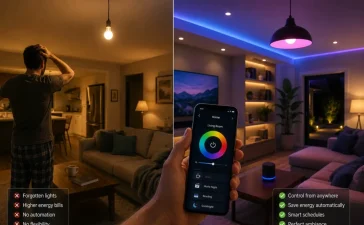

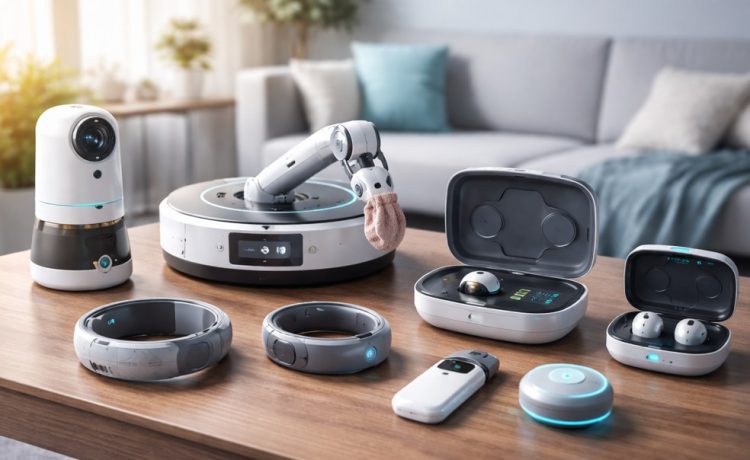
For over a decade, consumer tech promised an era of conversational digital concierges that would anticipate our schedules, manage our workflows, and simplify our days. What we actually got was a generation of stationary voice speakers that excel at setting three-minute pasta timers, reading tomorrow’s weather forecast, and frequently misunderstanding basic requests. The bottleneck was never just the software; it was the physical paradigm. A plastic cylinder anchored to a kitchen counter or a smartphone buried inside a pocket cannot understand what you are seeing, who you are speaking with, or when your focus is genuinely split.
The sudden maturation of multimodal foundation models, combined with high-density micro-electronics and efficient on-device silicon, has kicked off a major hardware transition. Dedicated AI gadgets are moving personal assistance away from stationary command prompts and into continuous, ambient context. These devices do not wait for a wake word and a structured query. Instead, they operate alongside the wearer throughout the day, observing the physical environment, processing natural conversation, and serving as a proactive cognitive buffer.
The Shift from Reactive Commands to Ambient Context
The fundamental limitation of the traditional smartphone assistant is its transactional nature. To get help, a user must pull out a slab of glass, authenticate, open an application, formulate a prompt, and wait for a response. By the time that sequence finishes, the moment requiring assistance has often passed.
True personalized assistance relies on ambient context awareness. Rather than waiting for a direct question, modern AI-enhanced gadgets maintain a continuous, low-power feed of environmental data. Using tiny microphones, ultra-wide optical sensors, and biometric arrays, the device gathers situational data: where you are, what you are looking at, what commitments you just made in a meeting, and how your physiological stress is tracking.
When intelligence becomes ambient, the nature of the assistance fundamentally changes. Instead of asking a phone to transcribe a thought, an ambient device notices that an acquaintance handed you a business card, extracts the contact information silently, and queues an action item to follow up before your next meeting. The hardware stops behaving like an appliance you control and starts functioning like an extra layer of working memory.
Form Factors Reshaping Daily Routines
The emergence of wearable and portable artificial intelligence is not settling on a single universal form factor. Instead, specialized form factors are carving out distinct operational niches across personal and professional life.
Vision-Enabled Smart Eyewear
Smart glasses have spent years shedding the stigma of early, awkward prototypes. Modern designs now hide high-resolution cameras, directional open-ear speakers, and onboard neural processors inside frames that look indistinguishable from conventional designer eyewear.
Because cameras share the user’s direct line of sight, eyewear enables multimodal look-and-ask interactions. A home cook looking at unfamiliar produce in a market can ask about flavor profiles and recipe ideas without touching a screen with wet hands. Travelers can gaze at a transit map in a foreign subway station and hear immediate route translations beamed straight to their ears. By grounding artificial intelligence in your immediate field of view, eyewear removes the friction of describing physical reality to an isolated computer.
Screenless Recorders and Cognitive Memory Buffers
Knowledge workers face an unrelenting volume of meetings, unscheduled calls, and fleeting brainstorms. Dedicated AI clips, pendants, and magnetic card-sized recorders have emerged as purpose-built memory engines.
Unlike traditional dictaphones that spit out endless audio files nobody has time to replay, these dedicated gadgets run continuous speech-to-text paired with semantic analysis. They automatically distinguish between different speakers, strip away conversational filler, and structure dialogues into executive summaries, chronological transcripts, and assigned action items. Clipping a subtle device to a lapel or resting it beside a notebook allows people to stay fully engaged in conversations without feverishly jotting down notes or worrying that an important detail will slip through the cracks.
Open-Ear Conversational Audio
Earbuds are evolving from simple acoustic drivers into hands-free information feeds. Modern AI-enhanced earbuds utilize beamforming microphone arrays to isolate the wearer’s voice even in crowded, noisy public spaces, allowing for natural, whisper-level conversation with personal language models.
In daily practice, this unlocks contextual audio prompts that flow directly into your routine. As you walk through an airport terminal, your earbuds can discreetly summarize a delayed flight’s gate change, identify the fastest path through an unfamiliar concourse, and translate real-time gate announcements in your preferred language. The user interface becomes entirely invisible, delivered via spatial audio cues that blend seamlessly with ambient everyday sounds.
Continuous Health and Recovery Trackers
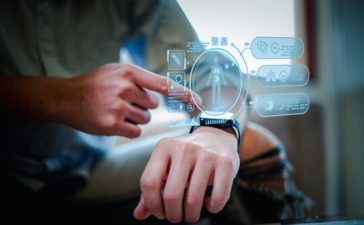
Personal assistance extends to managing human energy, focus, and recovery. Smart rings and screenless wristbands take physiological telemetry and translate raw metrics into personalized lifestyle guidance.
Instead of presenting confusing graphs of blood oxygen levels and raw heart rate numbers, these gadgets run continuous algorithmic baselines. They analyze heart rate variability, skin temperature fluctuations, and movement patterns to spot early signs of physical exhaustion or impending illness. If a user’s recovery metrics show severe sleep deprivation, the system does not just display a low score; it works with digital calendars to recommend moving high-intensity workouts or suggest a twenty-minute buffer between grueling afternoon meetings.
The Triad of Modern Personalization: Memory, Agency, and Edge Processing
Three technical pillars separate truly capable personal devices from superficial gadgets:
-
Persistent semantic memory: A standalone AI assistant is useless if it resets after every conversation. Advanced gadgets build vector-indexed, personal knowledge graphs over time, learning personal dietary restrictions, recurring colleagues’ names, project milestones, and communication quirks.
-
Decoupled edge-cloud computing: Constant streaming of audio and video to remote servers drains batteries rapidly and introduces annoying latency. Modern devices rely on low-power neural processing units (NPUs) on the device to handle local wake words, speech recognition, and basic filtering, offloading only complex reasoning tasks to high-capacity cloud clusters.
-
Proactive agent workflows: The highest-value personal assistants do not merely answer questions; they run tasks on your behalf. Once the device catches an intent, it links with scheduling software, email clients, and smart home networks to execute actions without demanding manual confirmation for every sub-step.
Practical Challenges Around Privacy, Social Norms, and Battery Life
Despite massive technical progress, dedicated AI hardware faces very real consumer hurdles. The most immediate is personal privacy and third-party consent. A device that constantly listens or captures visual frames raises legitimate concerns in private spaces, healthcare environments, and enterprise boardrooms. Manufacturers are adopting hardware-level mute toggles, prominent physical recording LEDs, and local encryption pipelines, but the social comfort around wearable cameras and ambient microphones is still being negotiated.
Battery efficiency also remains a stubborn physical constraint. Packing optical sensors, wireless radios, and neural processors into an ultra-lightweight frame forces uncomfortable trade-offs between battery longevity and device weight. Until solid-state batteries or low-power micro-architectures mature further, many compact wearables must balance all-day convenience against frequent trips to a charging dock.
Notification overload represents a final UX hazard. If an AI gadget interrupts its wearer with unsolicited suggestions and trivial observations, it becomes just another irritating source of digital fatigue. The difference between an indispensable personal assistant and an annoying novelty comes down to algorithmic restraint: knowing when to offer a timely, high-value insight, and when to stay quietly out of the way.
The real ambition of AI-enhanced gadgets is not to create more screens or demand more of our attention. It is the opposite. By embedding thoughtful, context-aware intelligence into ordinary objects like glasses, rings, and audio wearables, these devices handle the tedious administrative friction of everyday life behind the scenes. When technology recedes gracefully into the background, it leaves us free to focus our attention on the people and projects that actually matter.
Meta Title: